


For more than 50 years, University of California San Diego Health Sciences has played a central role in delivering patient care, advancing medical research, and training future health professionals. Community engagement has long been a core part of that work, extending beyond the clinic to the greater San Diego region.
One way the institution reaches out to local residents is by meeting them where they are. Mobile units, including the Shiley Eye Institute EyeMobile for Children and the UC San Diego Health Mobile Health Program, travel to schools, community events, and local organizations, expanding access to health care services, education, and prevention resources. Other mobile units including the UC San Diego Center for Medicinal Cannabis Research Mobile Assessment of Drugs and Driving Impairment (MADDI) program, provide opportunities for San Diegans to participate in cutting-edge health research.
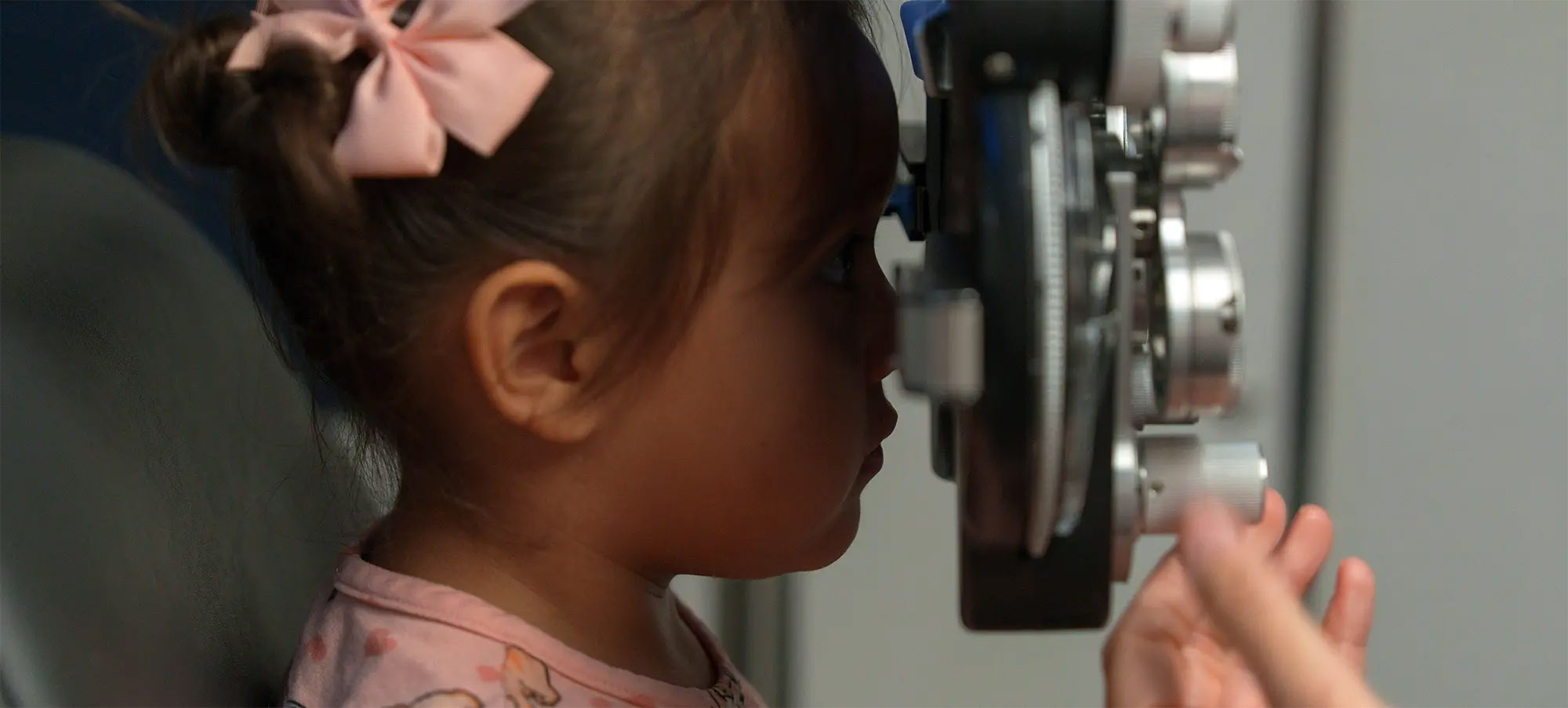
An estimated one in four children in elementary school have an undetected vision problem. For the past 25 years, the UC San Diego Shiley Eye Institute EyeMobile for Children has visited schools and community centers throughout San Diego, providing vision screenings to more than 238,000 children and giving out 19,285 pairs of glasses, all at no cost to families.
A similar unit for adults and seniors began operating in 2024 and has already reached thousands of patients as it travels to senior residences, public libraries, and other community locations. Both are initiatives of the Viterbi Family Department of Ophthalmology.
Families can access the programs without insurance or complicated paperwork, and the mobile clinic overcomes barriers — like lack of transportation — by bringing services directly to communities.
“Vision health is essential to a child’s ability to learn,” says Iliana Molina, DHA, MBA, director of the EyeMobile. “This clinic ensures every child, regardless of circumstance, has access to quality eye care and the chance to thrive in school.”
A recent loss of funding from both federal and state sources has placed these vital services for low-income families in jeopardy. Community generosity helps ensure these services remain available to those who need them most.
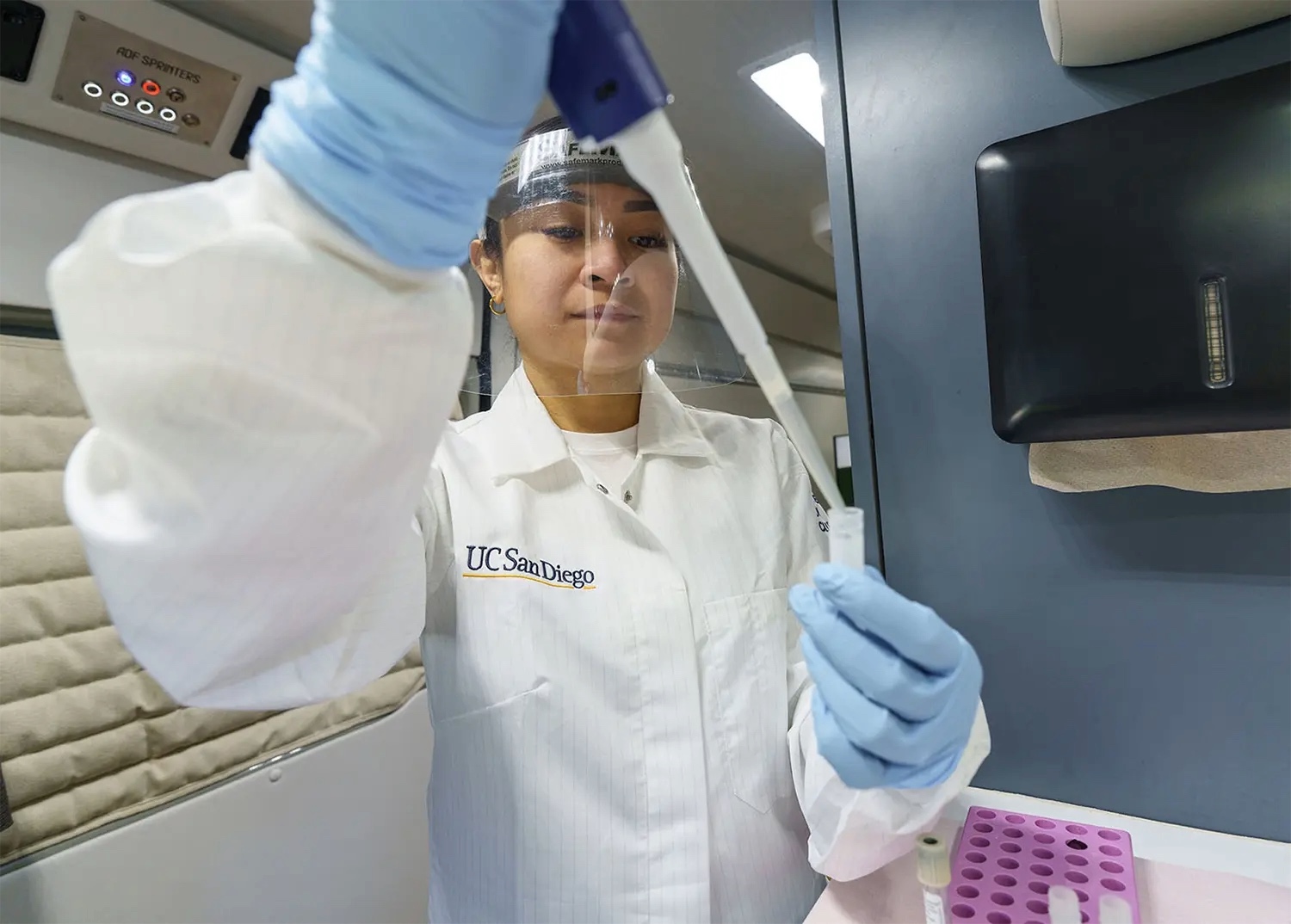
The UC San Diego Health Mobile Health Program launched in fall 2025 to deliver high‑quality care directly to under-resourced communities, increasing access to health care and social services by meeting people where they are.
The program’s two medical RVs function as compact clinics and laboratories. The General Mobile Clinic conducts diabetes and cardiovascular disease screening and adapts its services to meet the changing needs of communities. It also partners with campus and community groups such as the Owen Clinic, which provides HIV prevention medication through the clinic./p>
The Mammography Mobile Clinic provides 3D mammograms and breast health education to people who may lack access to screenings, particularly in remote or underserved areas, supporting early detection and cancer prevention efforts.
“We’re trying to build relationships, partnerships, and trust in the community to show we are a consistent presence,” said Crystal Wiley Cené, MD, MPH, chief administrative officer and associate chief medical officer for Health Equity at UC San Diego Health and professor of medicine at UC San Diego School of Medicine.
Students from medicine, nursing, pharmacy and public health gain hands-on experience while supporting the clinic’s work. “Growing up, I saw a lot of health disparities, and being able to provide care and education feels like we’re actually making a difference,” said UC San Diego medical student Jane Uche.
“We spend a lot of time educating the students and faculty to help view the mobile clinics as an extension of their education,” said Cené, adding that the program helps advance UC San Diego Health Sciences’ mission of delivering patient-centered care, conducting innovative research and training the next generation of health care leaders.
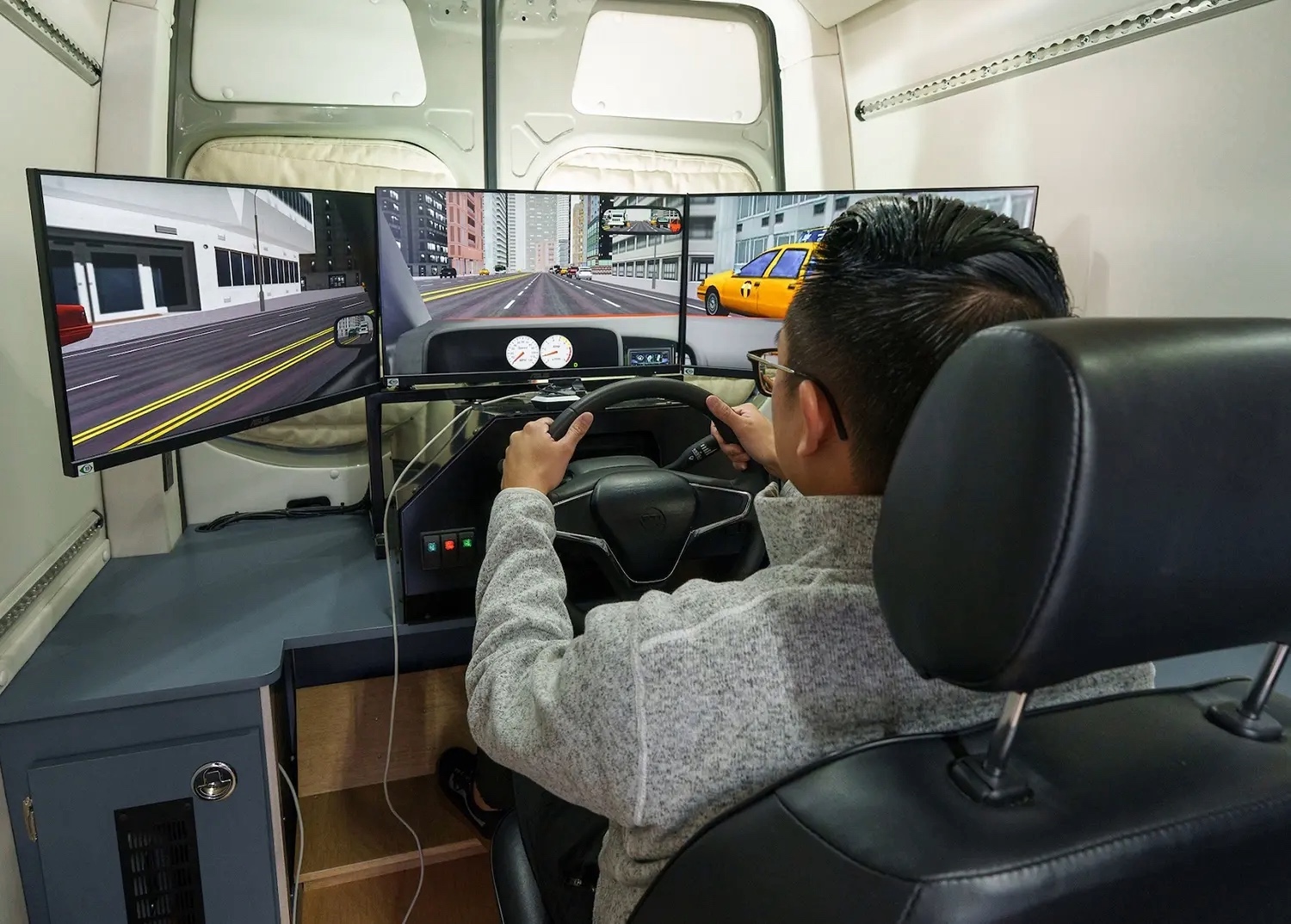
For more than a quarter century, the UC San Diego Center for Medicinal Cannabis Research has led efforts to study the health and public safety impact of cannabis consumption. Cannabis has been legal for medicinal use since 1996 and recreational use since 2016 in California, but its impact on driving performance has been poorly understood until recently.
Following on the heels of its landmark study on the relationship between smoking cannabis and driving impairment, the center launched a new investigation in fall 2025 to examine how high-THC products such as vape pens and dabbing wax affect driving. Funded by the State of California, researchers travel to volunteers’ homes across the San Diego region in a custom-built, solar-powered Sprinter van equipped with a driving simulator and laboratory. There, researchers measure THC levels and participants complete driving, attention and memory tests in the van before and after using the drug in their own homes.
“We can do blood draws and lab processing inside the van just like we would in the laboratory at UC San Diego, but with more flexibility and convenience for research participants,” said center Co-Director Thomas Marcotte, PhD, professor of psychiatry at UC San Diego School of Medicine. He says there have been very few cannabis studies focusing on high-THC concentrates, and the findings will provide critical data to inform policymakers, law enforcement and consumers on how these products affect the body and driving ability.
Story by: Mariel Jungkunz / mjungkunz@ucsd.edu, Susanne Clara Bard / scbard@ucsd.edu
Photos by: Kyle Dykes and Erik Jepsen


